




Applications open for new FERS course on AI and ML for Earth System Modeling and Prediction
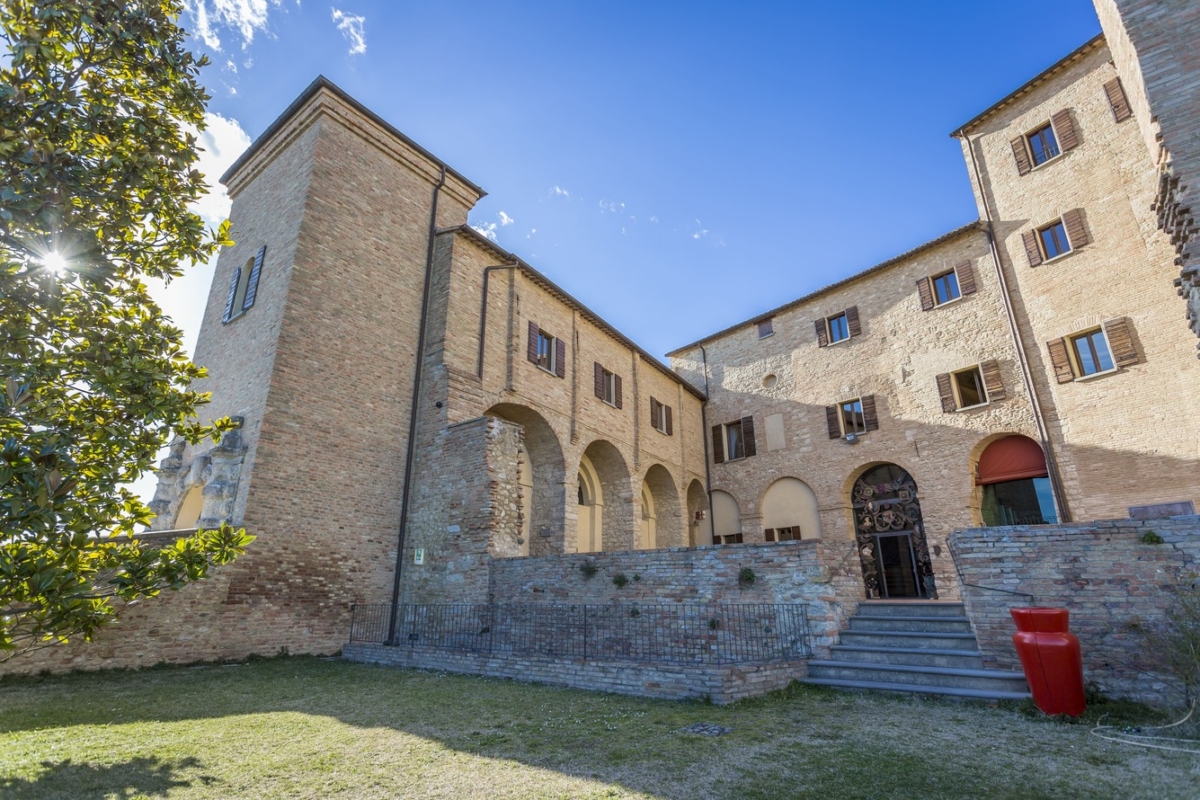
Applications are now open for the course “AI and Machine Learning for Earth System Modeling and Prediction,” organized by Future Earth Research School (FERS) of CMCC Foundation. Taking place from 8 to 19 June, 2026, the course is a unique opportunity for participants to gain hands-on experience with state-of-the art machine learning techniques for climate and weather modeling.
As the volume of climate-related data continues to grow, from satellite observations to high-resolution simulations, the challenge is no longer just storing information, but learning how to use it to uncover the mechanisms that drive Earth’s complex dynamics. The Course on “Artificial Intelligence and Machine Learning for Earth System Modeling and Prediction” is the new edition of a series of courses on AI & ML, data science and Earth system modeling. With “AI and Machine Learning for Earth System Modeling and Prediction,” the programme now shifts the focus toward the application of ML techniques to better understand, model, and predict the behavior of the Earth system, by exploring the forefront of machine learning and artificial intelligence applications in Earth system science.
Participants will gather in Bertinoro from 8 to 19 June, 2026, for an intensive, two-week-long training programme featuring lectures, discussions, practical sessions and hands-on activities.
From deep learning and generative models, to hybrid physics-ML approaches and uncertainty quantification, participants will gain experience in applying state-of-the-art ML techniques to the unique challenges of modelling complex dynamical systems.
Key learning outcomes of the course range from theoretical understanding of state-of-the-art AI and ML techniques and their applications to Earth system science, to hands-on experience with building, training, running, and validating models utilising Earth system datasets. Moreover, participants will have the chance to collaborate with peers, as well as interact with international experts in the field, to solve practical problems at the intersection of AI and climate science.
The course is directed by internationally recognised experts in climate modelling and prediction, Aneesh Subramanian and William Chapman. Lectures will be held by a faculty of international researchers specialising in data science, mathematical modelling, machine learning and deep learning for environmental and climate applications.
Following two previous courses on climate and data, this summer school represents another milestone for FERS, CMCC’s permanent initiative designed to provide high-level scientific training for early-career researchers and professionals.
Application details and support
Applications are open until May 3, 2026. The summer school is primarily designed for Ph.D. students, early-career researchers and professionals in relevant fields (e.g. climate science, Earth system science, applied mathematics, data science), working at the intersection of machine learning and Earth system modeling. Participants are required to have some coding experience in Python.
FERS is committed to fostering inclusion and equal opportunities. For this reason, the School offers limited financial assistance for participants who may otherwise face difficulties in accessing the course. Candidates interested in applying for financial assistance can specify so in the application form, and include a support statement in their motivation letter explaining their circumstances.
The Future Earth Research School (FERS) is a permanent CMCC Foundation initiative, coordinated by its Advanced Training and Education Center (ATEC). It offers high-level scientific courses to equip early-career researchers and professionals with the tools and skills to understand and anticipate future global environmental challenges. Through its activities, the school creates a dynamic environment where researchers and international experts come together to collaborate and share experiences on different multidisciplinary aspects of research, building a fertile ground for innovation and new research pathways.
More information is available here.