




From Scientific Connections to Strategic Partnerships: DCC-CR and CMCC at the 24th CIEP in Shanghai
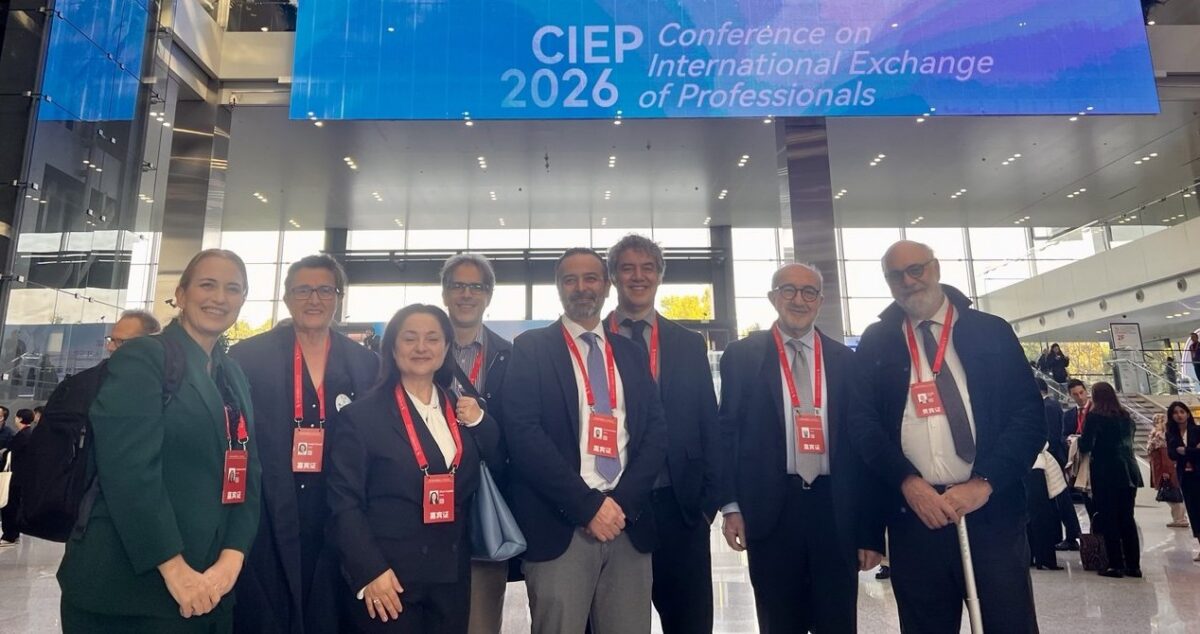
The participation of DCC-CR and CMCC in the 24th China International Talent Exchange Conference strengthened international scientific partnerships, marked a new cooperation agreement between CMCC and Sun Yat-sen University, and opened opportunities for joint research, education and capacity development across regions.
The Decade Collaborative Centre for Coastal Resilience (DCC-CR) and the CMCC Foundation – Euro-Mediterranean Center on Climate Change participated in the 24th China International Talent Exchange Conference (CIEP), held at the Shanghai World Expo Center. Bringing together international experts and institutional representatives from Asia, Africa and Europe, the conference provided a platform for advancing scientific cooperation in ocean and climate research, disaster risk reduction and sustainable development.
The delegation included Prof. Antonio Navarra, President of CMCC; Prof. Nadia Pinardi, former Director of DCC-CR; Dr. Giovanni Coppini, CMCC Project Director; Prof. Riccardo Valentini (CMCC); Prof. Lorenzo Mentaschi (University of Bologna); Dr. Francesco Maicu (CMCC); and Federica Orsi, Senior Communication Manager of DCC-CR.
A central component of the conference was the Sun Yat-sen University (SYSU) Talent Exchange Event, hosted by the Ministry of Human Resources and Social Security of the People’s Republic of China and organised by SYSU, which convened nearly thirty international experts to explore new opportunities for scientific exchange and long-term institutional cooperation.
A new framework for scientific cooperation
A major milestone was the signing of a Memorandum of Agreement (MoA) between CMCC and Sun Yat-sen University on 11 November 2026. The agreement establishes a framework for long-term collaboration, particularly through the development of joint research programmes and the co-organisation of education and training initiatives.
By combining the scientific expertise, research capacities and international networks of both institutions, the MoA opens opportunities for collaborative research, knowledge exchange and capacity development, including the training of future generations of scientists and ocean professionals.
The agreement also holds significant potential for the DCC-CR international cooperation framework. As a member of the Centre’s Partner Alliance Network, CMCC contributes to strengthening scientific connections and fostering collaborative initiatives aligned with the objectives of the UN Ocean Decade.
Advancing coastal resilience through international scientific dialogue
During the session “Ocean and Climate Science Supporting Disaster Risk Reduction and Sustainable Development” Prof. Nadia Pinardi delivered the keynote “Coastal Resilience in the UN Ocean Decade”, presenting DCC-CR’s activities and its contribution to advancing international cooperation on coastal resilience.
Particular attention was devoted to the Coastal Resilience Blueprint, the collaborative process bringing together scientists, institutions and coastal stakeholders to identify knowledge gaps, shared priorities and science-based solutions for resilient coastal communities and ecosystems. Particular attention was devoted to the Thematic Blueprint on Coastal Resilience, for which DCC-CR holds a leading and coordinating role within the UN Ocean Decade. Through a collaborative process involving scientists, institutions and coastal stakeholders, DCC-CR is working to identify critical knowledge gaps, shared priorities and science-based pathways towards more resilient coastal communities and ecosystems.
CMCC also contributed extensively to the scientific programme. Prof. Antonio Navarra presented the Centre’s ocean and climate services and chaired a session on early warning systems and urban climate, while Dr. Elena Xoplaki and Prof. Riccardo Valentini addressed climate-related societal risks and forest carbon monitoring, respectively.
Prof. Pinardi also moderated the closing roundtable highlighting the importance of integrating Global South perspectives into international scientific cooperation.
Expanding partnerships and future opportunities
Beyond the scientific sessions, the conference offered valuable opportunities to establish new connections with research institutions across Asia and Africa.
The participation in the CIEP formed part of a broader DCC-CR mission to China, which also included scientific meetings with Sun Yat-sen University in Guangzhou and coastal and estuarine research teams in Shanghai.
Together, the new CMCC–SYSU agreement and the partnerships explored during the conference demonstrate the potential of international scientific cooperation to translate shared expertise into joint research, education and capacity-development initiatives. For DCC-CR and its partners, these connections provide a valuable foundation for advancing the objectives of the UN Ocean Decade and strengthening Coastal Resilience worldwide.