




Adapting Europe: What it costs and why it makes sense
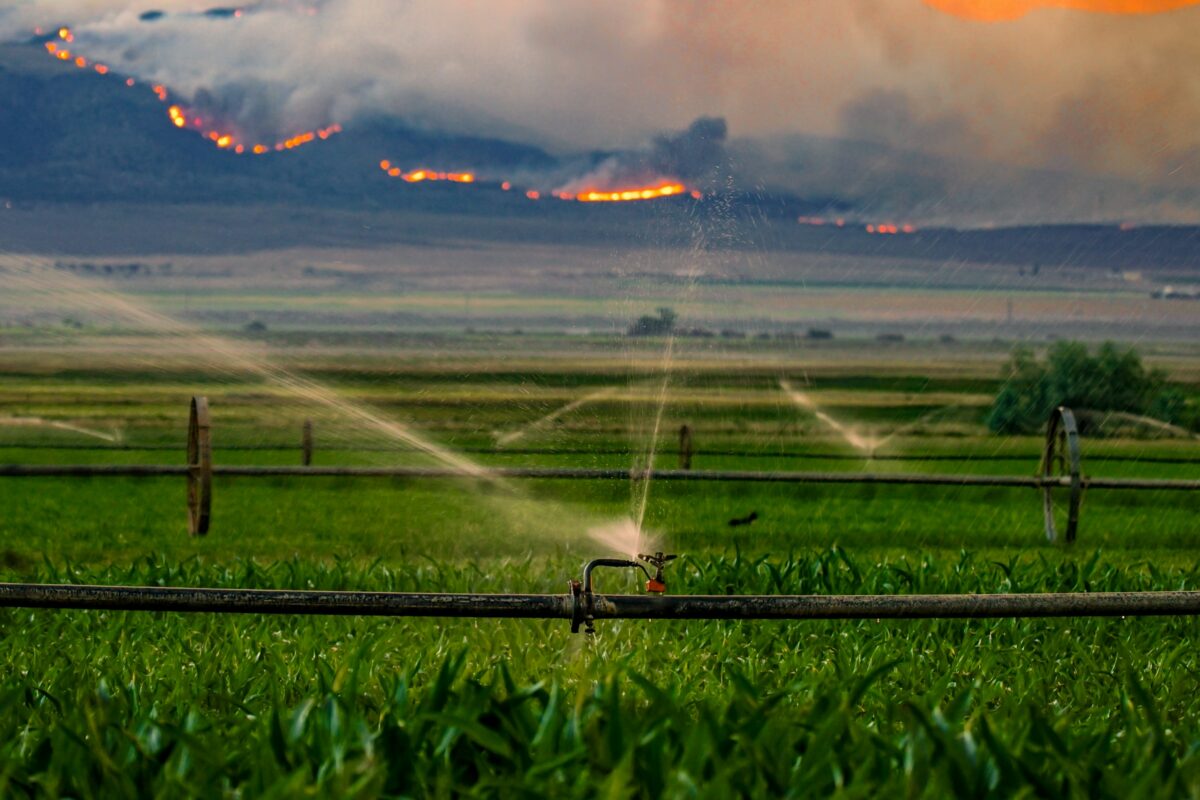
Does raising flood-exposed railways in Austria make sense? Are heat health measures in Bremen, Germany delivering benefits? Can drones monitor wildfire risk in Sorrento, Italy, effectively? New tools developed by CMCC now allow policymakers, businesses and communities to answer these kinds of questions effectively whilst providing evidence for the cost effectiveness of any given adaptation measure. “In most cases and across most sectors, adaptation is very effective, providing a high benefit-to-cost ratio and reducing impacts between 20 and 50%,” says CMCC researcher and project co-lead Enrica De Cian.
In Bremen, Germany, heat-health measures costing around €510,000–556,000 a year could deliver an estimated €50–55 million in annual benefits from reduced deaths and illness.
In Austria, raising flood-exposed rail sections would cost around €31 million, with benefits exceeding costs in 29 of 35 regions assessed.
These are just two examples that emerge from the CMCC led European research project ACCREU on the impacts of adaptation choices. Knowledge and information that are accessible through the development of the Climate Change Impact & Adaptation Scenario Explorer and the European Adaptation Handbook, which delivers easy-to-use access to information on opportunities and costs associated with adaptation choices.
“Adaptation is successful when good and accessible information is available to all the actors involved,” says CMCC researcher and co-lead of the project Francesco Bosello. “This is a call to conceive adaptation as a co-designed, co-produced and co-delivered process involving scientists, decisionmakers and local communities. It not only maximises the acceptability and uptake of adaptation by reducing its non-economic cost, but also minimises the risk of maladaptation in the short and long term.”
Tools for practical decisions
In more detail, the Handbook provides an interactive guide to findings, recommendations, methods and lessons learned. Expert interviews, infographics, factsheets, articles and a climate-risk glossary are designed to make the evidence easier to understand and use.
“The Handbook allows users to navigate 15 adaptation case studies across 7 decision making domains aligned with the EU Mission Adaptation priorities. The case studies give insight into the practical economic adaptation considerations of local, regional or national stakeholders,” says Enrica De Cian.
The Scenario Explorer provides an interactive way to explore findings on the socioeconomic consequences of climate change in Europe through maps and graphs.
“With the Scenario Explorer users, including but not limited to policymakers and practitioners, can navigate project quantitative results in a structured way including through access to estimates of climate impacts and adaptation cost benefits. They can find projected impacts for key physical and biophysical variables in agriculture, sea-level rise, riverine floods, labour (productivity and supply), energy supply, energy demand, health, and biodiversity, as well as the macroeconomic consequences in terms of GDP changes relative to the current climate, a clear and communicable metric” says De Cian.
The distribution of climate change impacts, which is another important novel contribution of the project, can be explored at subnational and national level across EU regions, over time, and across sectors. For example, Central-Eastern Europe and Southern Europe experience disproportionately higher macroeconomic costs under all warming scenarios, where GDP losses could reach over 5% by 2050 and 9% by 2070. Together, the tools support better-informed planning and investment discussions: helping public authorities examine the evidence behind adaptation priorities, businesses consider adaptation choices, and stakeholders understand the assumptions and trade-offs involved. “The Handbook provides a route into the lessons and methods; the Scenario Explorer offers a visual route into the scenario results,” explains De Cian.
In addition to these tools, the ACCREU project has also released the Data Catalog, a central public entry point to the quantitative datasets generated through the project’s assessment of climate-change impacts and adaptation. Designed for project partners as well as external researchers, policy analysts and other stakeholders, it brings together public datasets with direct links to the underlying data and metadata.
“The Data Catalog gives users one common interface to navigate and download ACCREU’s datasets, which cover agriculture and land use, water, ecosystems and biodiversity, energy, labor, health, coastal impacts, wildfire and the economy,” says Amanda Palazzo, project partner from IIASA. “This makes the evidence easier to find, cite and reuse, and it will remain accessible well beyond the lifetime of the project.”
What works – and where?
The case studies show why adaptation cannot be reduced to a universal list of best investments. In Austria, raising rail sections exposed to certain kinds of floods was economically worthwhile in most regions assessed, whereas the equivalent intervention on roads generally was not.
Other choices require looking beyond narrowly defined financial returns. “Adaptation has at least a triple dividend: across scenarios and regions we can say it halves impacts; since climate change would increase inequalities, adaptation would mitigate the regressive effect of climate-related impacts; it can also lead to fiscal benefits because, notwithstanding higher adaptation costs, it is shown that the gains brought to the capacity of the tax system to raise revenues are larger..,” says Bosello.
For example, coastal appraisals can undervalue nature-based measures when they omit wider environmental benefits, while a review of 48 wildfire adaptation case studies finds that European management remains focused on suppression and emergency response despite the potential cost-effectiveness of prevention.
The water-management studies reveal a different tension. In Spain’s Ebro basin, switching to less water-demanding crops saves water but reduces farm revenues, showing how an environmental gain can impose costs on a particular group. Similarly, the heat-health analysis finds that addressing the general public is not enough to ensure fair protection: measures need to identify and target those who are most vulnerable with dedicated measures.
“Adaptation benefits will be widely distributed to all groups of societies, including governments and the public sector. Yet, the specific distribution of adaptation costs will vary with country and the underlying institutional landscape, as well as across adaptation sectors and domains,” says De Cian.
What remains unprotected?
Adaptation decisions also need to consider the limits of protection and the consequences of today’s choices. In Den Helder, the Netherlands, a proposed dike combining flood protection with housing creates benefits today, but the appraisal also considers the cost to future generations of removing homes if sea-level rise exceeds five metres.
Adaptation might be implemented evenly spatially, and still might not be equally accessible across social groups. For example, firebreaks are concentrated in high-value forest areas and rarely extend to more marginal areas, which reduces the protection for the people living there. Risk-based insurance premiums provide a risk signal but can become unaffordable in high-risk areas, potentially locking in households that cannot move out and cannot insure themselves.
Understanding these nuances is key to effective adaptation.
Gaps in knowledge matter too: the heat-health lessons emphasise identifying vulnerable groups, while the financial-risk review finds that several potential channels of climate-related financial disruption remain underexplored. The evidence therefore supports scrutiny not only of what an intervention protects, but also of what the appraisal may leave outside its scope.
“In most cases and across most sectors, adaptation is very effective, providing a high benefit-to-cost ratio and reducing impacts between 20 and 50%,” says De Cian. “At the same time, analysis also reveals that mitigation is very much needed to maintain the effectiveness of adaptation and limit the extent of residual damages, especially after 2050.”