




Making regenerative design a reality across Europe
Bringing together 17 partners from across Europe, REGEN4BE aims to transform the way neighbourhoods are designed, built, and renovated; placing people, nature, and long-term environmental regeneration at the heart of the built environment.
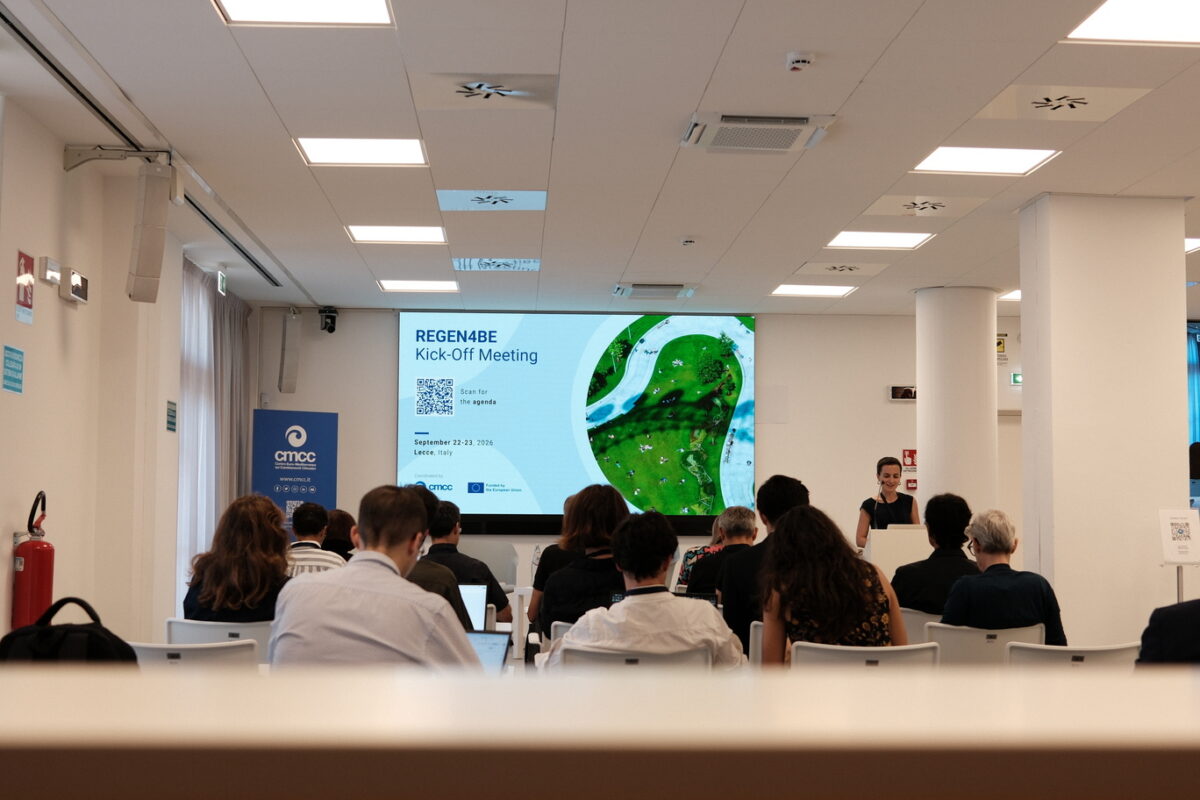
The European project REGENerative design FOR the Built Environment (REGEN4BE) officially announces its launch, following the in presence kick-off meeting, held in Lecce at the end of September, and the rolling out of research activities.
The project, coordinated by the Euro-Mediterranean Centre on Climate Change (CMCC), brings together a diverse consortium of 17 partners from 10 EU Member States and 2 associated countries, including research centres, universities, start-ups, manufacturers, local authorities, architects, engineering consultants, and real estate developers. By combining scientific expertise, technological innovation, design, industry knowledge, and public-sector experience, REGEN4BE seeks to turn regenerative design into a practical and scalable approach for the construction and renovation of neighbourhoods across Europe.
Carmela Apreda, Junior scientist at CMCC and project coordinator commented the official start of the activities: “It is both an honour and a pleasure to lead such a diverse consortium, bringing together a wealth of perspectives, and expertise. If I had to describe REGEN4BE in three words, they would be: measurable, scalable, and participatory.
When I think about the built environment of the future, I envision it as an integral and open part of the wider systems with which it interacts: a dynamic, living system that supports the well-being of both people and nature. Through REGEN4BE, we aim to contribute to a future in which the built environment fosters a more organic, balanced, and mutually beneficial coexistence between human and natural systems.”
Regenerative design goes beyond minimising environmental impacts or sustainability. It aims to create places that actively contribute to the restoration and improvement of natural and human systems, fostering positive relationships between people, buildings, and the ecosystems around them.
REGEN4BE will advance this vision by integrating innovative digital tools, new materials and technologies, participatory processes, and adaptive policy and regulatory frameworks. Its approach will address four interconnected regenerative domains: climate resilience, ecological primacy, resource-positive performance, and human health and well-being.
A key principle of the project is that regeneration must be rooted in the specific characteristics of each place while connecting decisions made at the scale of individual materials, building components, and spaces with broader patterns at neighbourhood and district levels. Progress will be assessed through simulation, continuous monitoring, and post-occupancy evaluation, helping ensure that local improvements generate wider benefits without creating harmful trade-offs.
To test and validate this approach in real-world contexts, REGEN4BE will establish Living Labs across five demonstration and replication sites in Europe, spanning through urban, peri-urban, and rural environments. The project will also support three additional replication sites through Financial Support to Third Parties, extending the potential reach of its solutions. These Living Labs will bring together citizens, professionals, and local stakeholders to co-design, test, and validate solutions adapted to local needs and conditions. Through participatory processes, the project will foster collaboration between communities and experts, in line with the New European Bauhaus principles of sustainability, inclusion, and beauty.
REGEN4BE will deliver a range of innovative tools and solutions to support the transition towards a regenerative built environment. Among its main outcomes are a Regenerative Evaluation Framework and Guidelines, alongside the Regenerative Design Intelligence Platform (REDIP), integrating four digital twins, each addressing one of the project’s four regenerative dimensions. These digital tools will support the planning, design and assessment of regenerative interventions through data integration, simulations and scenario analysis.
The project will also develop and test three material innovations, each contributing to specific regenerative goals: circular bio-soils for nature-based solutions, lightweight green roofs compatible with cultural heritage requirements, and recycled materials incorporating carbon-capture approaches. Together, these digital and material innovations will provide practical solutions to make neighborhoods more resilient.
Alongside technological and material innovation, REGEN4BE recognises that achieving lasting change requires supportive governance and regulatory conditions, addressing barriers to the adoption of regenerative design and strengthening collaboration with European initiatives, including the New European Bauhaus Hub and the Built4People Partnership.
Ultimately, REGEN4BE seeks to help create neighbourhoods that do more than reduce their environmental footprint: places that restore ecosystems, strengthen climate resilience, enhance human well-being, and offer inclusive, healthy, and inspiring environments for current and future generations.
With its partners now working together towards this shared ambition, REGEN4BE is taking the first steps towards turning regenerative design from a promising concept into a tangible reality for Europe’s built environment.