


Tracking the long journey of smoke from wildfires
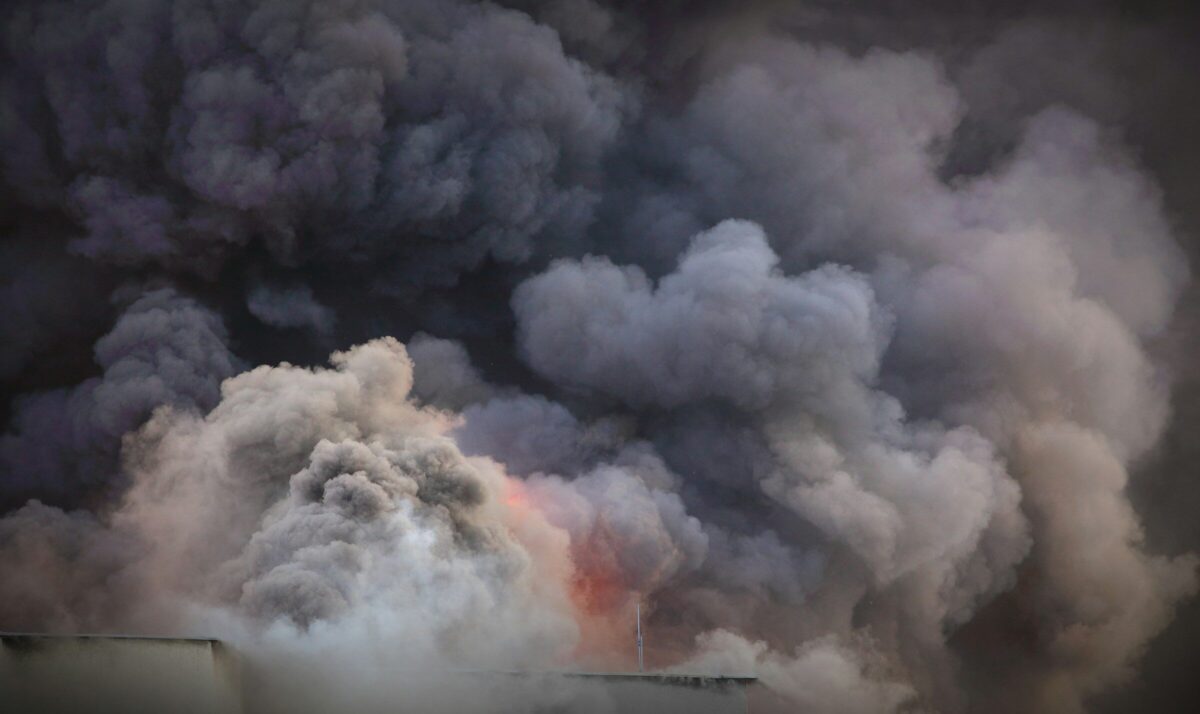
When we see a forest fire on the news, it is easy to think of it as a local emergency. A new CMCC study shows that smoke from Italian forest fires can travel hundreds to even thousands of kilometers, carrying fine particles such as PM2.5, black carbon and organic carbon across the Mediterranean and into other European regions. By reconstructing where this pollution goes between 2008 and 2024, the research offers one of the first long-term pictures of how Italian wildfire emissions move through the atmosphere and impact air quality far from the flames.
While it is well known that greenhouse gas emissions from fires contribute to climate change at the global scale wildfire smoke also contains pollutants that can have significant and more immediate impacts on air quality and human health far from the fire source. A new CMCC study – Where do wildfire-related emissions travel? Transport trajectories of black carbon, organic carbon, and PM2.5 from Italian forest fires (2008–2024) – highlights this crucial dimension by focusing on three major types of forest fire pollution: PM2.5 (tiny particles that can enter deep into the lungs), organic carbon (particles released when vegetation burns), and black carbon (soot that also contributes to warming the atmosphere).
“Our results show that smoke from Italian forest fires can travel hundreds to even thousands of kilometers, crossing the Mediterranean and affecting air quality in other countries,” explains lead author and CMCC researcher Liudmyla Malytska. As climate change drives more frequent and intense fire events across Europe, understanding the transport and fate of these pollutants is becoming increasingly important for public health and regional air quality management.
Following Italian wildfire smoke
We often hear about how much pollution fires produce, yet this study asks where that pollution actually goes, and therefore who it may affect. Using wildfire observations and atmospheric transport modelling, the researchers mapped the main pathways that smoke follows after leaving Italian fire‑prone regions over the period 2008–2024.
“This is one of the first studies to provide a long‑term picture of how wildfire emissions from Italy move across the Mediterranean, helping identify the regions and populations most likely to be affected,” notes CMCC researcher and co-author of the study Maria Vincenza Chiriacò.
Fire activity in Italy was found to be highly localized, with hotspots in Calabria, Sicily, central‑southern Sardinia, and the northern mountain regions. Over the study period, annual PM2.5 emissions from Italian forest fires ranged from about 0.3 to 2 kilotonnes and increased over time, with organic carbon contributing roughly 60–80% of the emissions and black carbon less than 10%.
However, the analysis shows that satellite based sensors detected only about 21% of the fires observed in the high‑resolution burnt area data, suggesting that widely used global wildfire datasets likely underestimate total emissions. “A ‘blind spot’ in current data is that many smaller fires are missed, meaning current estimates may underestimate how much wildfire pollution is actually being released and transported across borders,” explains Chiriacò.
The spatial patterns of smoke transport are just as important as the volumes emitted. Fires in Southern Italy, particularly in Sicily and Calabria, often send smoke across the Mediterranean toward North Africa and the Balkans, even though individual events there tend to be relatively low‑intensity (around 300 kg of black carbon per fire on average). In northern Italy, fewer but more intense fires (around 550 kg of black carbon per fire) usually keep pollutants closer to their source, but when smoke is lofted to higher altitudes, winds can carry it much farther, spreading pollution across large parts of Europe and beyond.
Hidden connections revealed
By following smoke instead of just counting burned hectares, the study reveals how Italian wildfires are tied to regional air quality well beyond national borders. PM2.5, black carbon and organic carbon from forest fires can deteriorate air quality and harm human health in countries that may not be experiencing fires at all, underscoring the need for cross‑border coordination in air‑quality and wildfire management.
“When we think about wildfires, we usually focus on the areas that burn,” says Malytska. “But smoke doesn’t stop at regional or national borders. This study shows that pollution from Italian wildfires can travel across the Mediterranean and affect people far from the source. This research was important because it helps us better understand these hidden connections and improve our ability to assess the wider impacts of wildfires on air quality and health.”
“What emerges as a key novelty from this study is that, beyond greenhouse gas emissions contributing to climate change at the global scale, wildfires also generate air pollutants that can have significant localized impacts far from their source, potentially affecting both human health and ecosystems well beyond the immediate area of the fire,” adds Chiriacò.
The study provides tools and evidence that can support air‑quality authorities, health agencies and policymakers in better anticipating where wildfire pollution will travel. As fire seasons intensify in a warming climate, understanding these trajectories will be critical for designing effective early‑warning systems, cross‑border cooperation and adaptation strategies.
For more information:
Malytska, L., & Chiriacò, M. V. (2026). Where do wildfire-related emissions travel? Transport trajectories of black carbon, organic carbon, and PM2.5 from Italian forest fires (2008–2024). Atmospheric Environment, 373, 121922. https://doi.org/10.1016/j.atmosenv.2026.121922