




When drought, dry landscapes and growing towns collide: Wildfire hotspots in Southern Europe
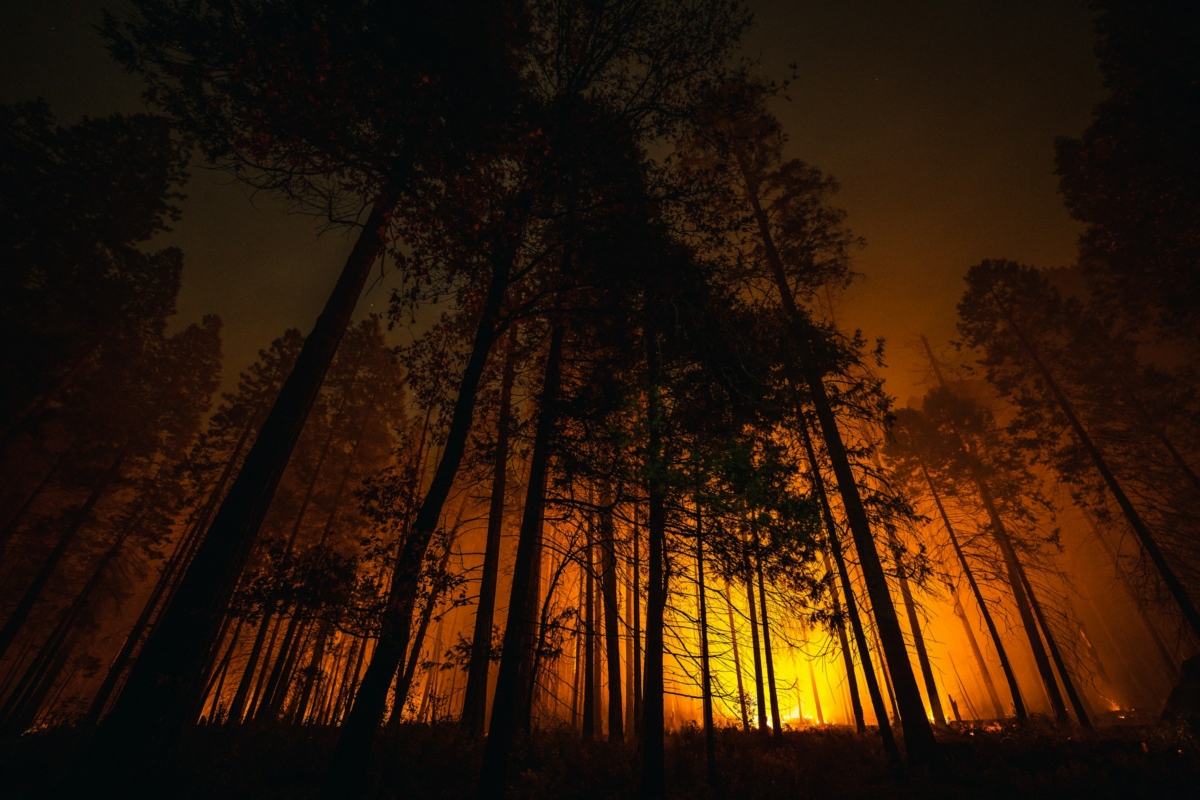
In some parts of Southern Europe, more than half of the land has burned at least once in the last two decades. In Turkey’s Anatolian region, the area where houses meet flammable vegetation has grown by more than 70%, and vegetation has become over two‑thirds more flammable. A new study shows that where drought, dry landscapes and expanding settlements move in the same direction, wildfire risk rises sharply – turning parts of Southern Europe into true fire “hotspots”.
The research entitled Intertwining macro-drivers to explore hotspots of wildfire occurrence in Southern Europe, examines 20 years of data across six biogeographical regions, from the Iberian Peninsula to Turkey. By looking at climate (drought), vegetation flammability, and the wildland–urban interface (WUI) together with fire frequency and size, the authors identify where these pressures reinforce each other and where they do not.
The study finds that wildfire activity is very uneven across Southern Europe, with some regions standing out as clear hotspots. In the Anatolian bioregion, which covers much of Turkey, 57.5% of the area burned at least once between 2001 and 2020, while in the Mediterranean bioregion – which includes large parts of coastal Southern Europe – the figure is 48.6%. In contrast, only 20% of the Black Sea region was affected by fire in the same period.
More than 30% of burned areas in the main hotspot regions are linked to simultaneous increases in drought intensity, landscape flammability and WUI expansion. Anatolia shows particularly strong signals, with WUI expanding by 73.4% and landscape flammability increasing by 67.2%, while the Continental region of Southern Europe experiences widespread drying, with 90.5% of its area affected by increasing drought values.
“This research is relevant to the public because wildfires in Southern Europe are not driven by a single cause,” explains CMCC researcher Maria Vincenza Chiriacò. “They emerge from the combination of climate stress, changes in vegetation and land cover, and the expansion of human settlements into fire‑prone landscapes. Our study shows that wildfire risk is spatially uneven: some areas become hotspots because several risk factors evolve in the same direction, while other areas show more complex or locally driven patterns.”
A multi‑driver view of wildfire risk
The main innovation of the paper is a spatially explicit framework that combines three “macro‑drivers” – drought, vegetation flammability and WUI – with trends in the number and size of fires. Instead of looking at climate, land cover or human pressure separately, the authors perform a co‑occurrence analysis to detect where these processes reinforce one another and where they decouple.
This framework distinguishes five types of areas: significant hotspots, candidate hotspots, significant coldspots, candidate coldspots and mismatch zones. Significant hotspots are grid cells where fires are becoming more frequent or larger at the same time as drought intensifies, flammability increases and the WUI expands, with all trends statistically significant; candidate hotspots show the same pattern but with weaker statistical support for some variables. Significant coldspots and candidate coldspots capture areas where wildfire activity decreases even though macro‑drivers are moving in a direction that would normally favour fires, while mismatch zones are places where trends do not align.
“It is increasingly important to develop spatially explicit, multi‑driver risk information to identify wildfire hotspots across Southern Europe,” says Chiriacò. “Such evidence is essential to inform tailored, place‑based policies for wildfire prevention and risk management, ensuring that adaptation strategies are targeted, effective, and responsive to local conditions.”
Hotspots, coldspots and “mismatch” areas on the map
Significant wildfire hotspots are concentrated mainly in the Anatolian and Mediterranean bioregions, with additional clusters in the Black Sea and Continental regions. Candidate hotspots extend these patterns into wider parts of central Turkey, southern Italy and the southern Iberian Peninsula, where the same drivers are moving in a concerning direction even if not all trends are statistically significant yet.
Significant coldspots are rare and are found mostly in the Atlantic bioregion, especially in northern Portugal, while candidate coldspots appear in parts of the north‑western Iberian Peninsula and southern Greece. Across all regions, however, mismatch areas dominate, ranging from about 67.5% of grid cells in Anatolia to more than 93% in the Alpine region. In these zones, wildfire trends cannot be explained simply by large‑scale drought, flammability or WUI, suggesting a strong role for local factors such as ignition sources, land management, landscape configuration, firefighting capacity or particular weather conditions.
“What is particularly valuable in this study is that it looks at both sides of wildfire dynamics,” says co‑author Onofrio Capelluti. “Hotspots show where climatic, ecological and human pressures are converging into increasing wildfire activity, while coldspots and mismatch areas are equally informative because they suggest that some socio‑ecological systems may still buffer, resist or decouple fire occurrence from broader pressures.”
From emergency response to anticipating risk
The authors stress that the results have direct implications for wildfire governance in Mediterranean landscapes. Co‑author Mario Elia points to the “firefighting trap”: decades of successful fire suppression have reduced small and moderate fires in many areas, but have also allowed fuels, exposure and vulnerability to accumulate. When drought, flammable vegetation and expanding WUI come together, suppression alone becomes increasingly difficult and sometimes insufficient.
“We need to move from reacting to fires only when they occur towards anticipating where the underlying drivers are aligning before extreme events happen,” says Elia. “By identifying areas where climate stress, landscape flammability and human pressure reinforce each other, this study provides evidence that can support prevention, preparedness and more informed suppression strategies. Fire suppression remains essential, but it must be guided by prevention and prediction. Otherwise, we keep fighting the symptoms while the structural conditions that produce severe wildfire risk continue to intensify.”
For more information:
Cappelluti, O., Ascoli, D., Oliveira, S. et al. Intertwining macro-drivers to explore hotspots of wildfire occurrence in Southern Europe. Ecol Process 15, 10 (2026). https://doi.org/10.1186/s13717-025-00661-6