




Capturing system complexity to decarbonize global shipping
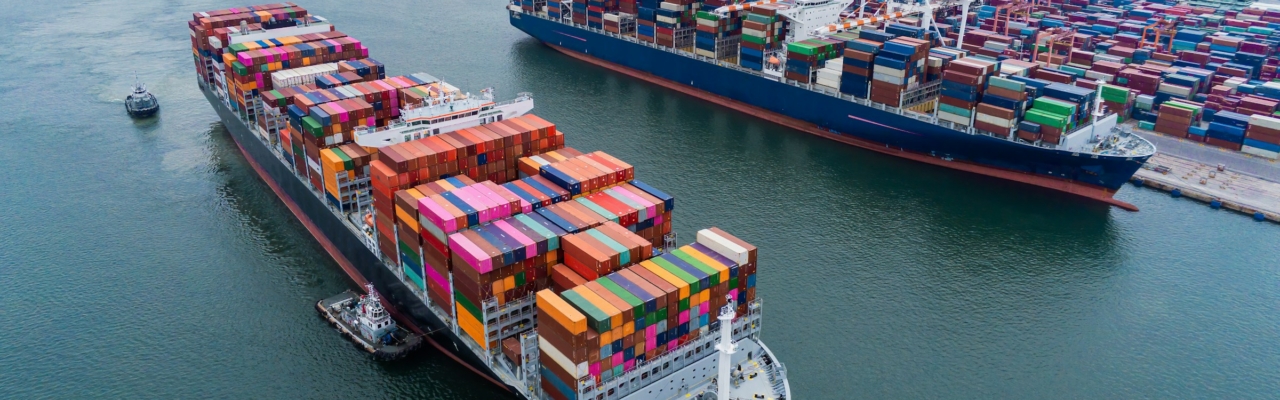
The maritime sector is a crucial cog in everything we consume and produce, supporting over 80% of all international cargo movements by weight. However, it is also considered one of the hardest parts of the global economy to decarbonize and currently produces around 3% of global CO2 emissions. A new paper, published in Environmental Research Letters, proposes a multilayer modeling framework to make sense of this complexity and support evidence-based pathways towards net-zero shipping.
Led by an international team with key contributions from CMCC researchers, the study Capturing system complexity in maritime decarbonization: a multilayer modeling perspective, maps how technologies, markets, policies, and behaviour interact across scales in the race to cut emissions from global trade at sea.
Maritime transport has struggled to decarbonize due to a combination of lack of funding and political will for zero-carbon fuels but also sector-specific barriers such as the long lifespans of maritime assets and the split incentives between shipowners and charterers. Commercial cargo ships and containers form the backbone of global supply chains, meaning that any technological or logistical disruption at sea can ripple through other sectors and directly affect households around the world. As the authors of the paper emphasize, understanding these interlinkages requires close coordination across disciplines, methods, and models that typically operate in isolation.
“The interdisciplinary approach of this paper enables decision makers to better understand the rapidly shifting landscape of maritime transportation by considering not only the technological readiness of the decarbonization options but the broader sociopolitical context of global trade and shipping demand,” says CMCC researcher Soheil Shayegh, one of the co-authors of the study.
A multilayer blueprint for maritime decarbonization
The paper proposes a structured way to connect different strands of analysis that are usually kept separate. The multilayer approach integrates technical, economic, and policy dimensions, allowing researchers to explore how changes in one layer – for instance fuel technologies or ship design – feed through to trade flows, energy demand, and regulatory frameworks.
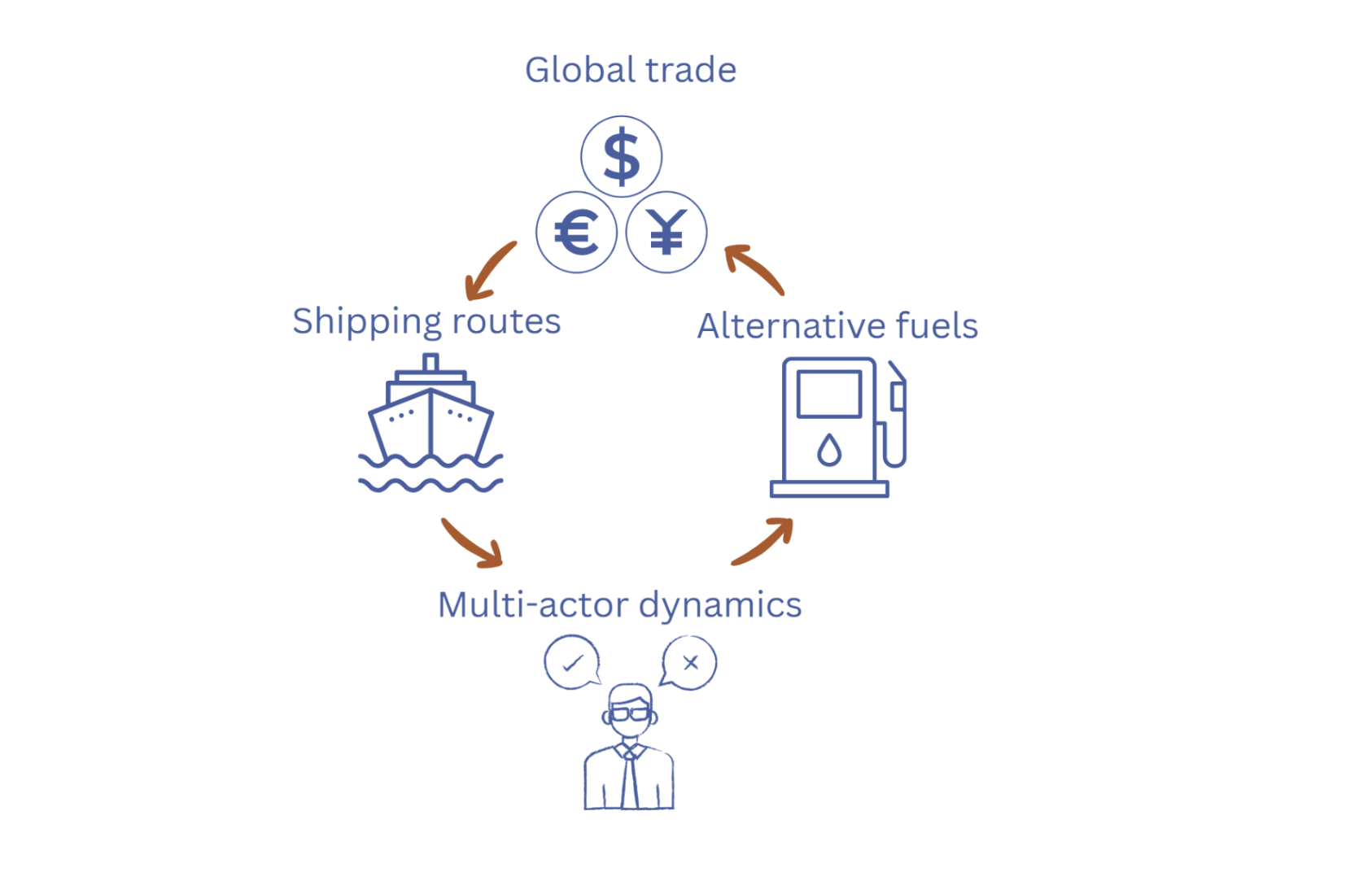 Rather than delivering a single scenario or numerical forecast, the study offers a conceptual and methodological blueprint that can be adapted to a variety of real-world decision contexts.
According to the authors, this evidence-based numerical framework is designed to reduce uncertainty and risk in decision making by systematically comparing decarbonization options under different assumptions about future technologies, trade routes, geopolitical risks, energy shocks, climate policies, and supply-chain disruptions. By reviewing existing numerical models alongside their limitations, the paper highlights how multimodel integration can deliver more realistic assessments of feasible pathways to decarbonise shipping.
The main innovation of the paper is its proposed multimodel integration which establishes the conditions for dialogue across very different fields of climate science, economics, technology development and engineering, global trade, and even social studies. By aligning these tools within a common framework, the approach would make it easier to evaluate, for example, how a switch to alternative fuels or new shipping corridors might interact with climate policy, port infrastructure, and global demand patterns.
From isolated studies to integrated insights
While the literature on maritime decarbonization is growing fast, many studies focus on individual components – such as ship technologies, fuel options, or specific policy instruments – without systematically embedding them in broader economic and societal transformations. The new framework explicitly aims to move beyond these isolated analyses by providing a common structure in which diverse models and datasets can interact.
“What I find most promising about this work is the attempt to move beyond isolated analyses,” says CMCC researcher Paola Rocchi. “Decarbonizing shipping is not only a technological challenge; it is also a trade, energy, and policy challenge. We aimed to create a framework that reflects this complexity and helps assess decarbonization pathways in a rapidly changing international environment.”
CMCC senior scientist Gianandrea Mannarini, who works on ship weather routing and maritime data science, underscores the potential of the proposed modeling approach . “I think that, if correctly implemented, our framework could deliver insights that complement those from sectoral studies on maritime decarbonisation,” he says as he stresses the scientific challenge of integrating so many different modeling layers.
By offering a blueprint for multimodel integration, it can be used to explore questions that matter to regulators, shipowners, cargo owners, and financial actors, such as the timing and sequencing of investments, the resilience of different fuel pathways, or the distributional impacts of new regulations.
For more information:
CMCC has been directly involved in the development of key models considered in this framework: the Computable General Equilibrium model ICES, which captures global trade and economic interactions; the Integrated Assessment Model WITCH, which links energy systems, technology and climate; the Weather Routing Model VISIR-2, which simulates optimal ship routes; and Agent-Based Models , which represent the behaviour of individual actors and organisations
Chepeliev, M., Banares-Alcantara, R., Campagnolo, L., Halim, R. A., Hall, J. W., Mannarini, G., Naghash, H., Palazzi, C., Parrado, R., Rocchi, P., Taberna, A., & Shayegh, S. (2026). Capturing system complexity in maritime decarbonization: A multilayer modeling perspective. Environmental Research Letters, 21(10), 101001. https://doi.org/10.1088/1748-9326/ae61ce