



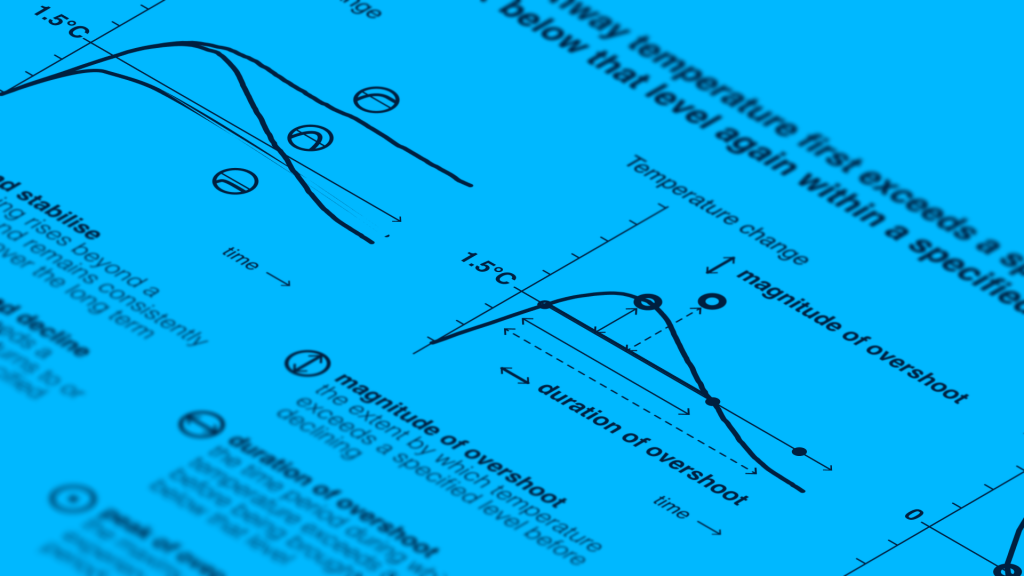
Overshoot: what does it mean to exceed and return to 1.5 ºC?
A resource to understand overshoot in the context of the science-policy interface
Global temperature continues to rise, the last decade was the warmest on record. The long-term global temperature goal of the Paris Agreement calls for temperature to be limited to well below 2°C, pursuing efforts to limit the increase to 1.5°C, compared to pre-industrial levels.
Global warming, assessed over a period of decades, is expected to reach 1.5°C before the mid 2030s. Annual temperature already exceeded 1.5°C for the first time in 2024.
With every increment of warming, the severity of impacts, losses, and damages increases. Exceeding 1.5°C will open a debate on bending the curve to bring global warming back down to 1.5°C, and “keeping 1.5°C alive”.
This is a new conversation for policymakers, society and the research community. It needs a shared understanding of the overshoot concept and science-based evidence of the implications for climate risk, adaptation and mitigation, including distributional aspects, social acceptability, and sustainable development more broadly.
Authors
This resource is based on the article Overshoot: A Conceptual Review of Exceeding and Returning to Global Warming of 1.5°C, Andy Reisinger, Jan S. Fuglestvedt, Anna Pirani, Oliver Geden, Chris D. Jones, Shobha Maharaj, Elvira Poloczanska, Angela Morelli, Tom Gabriel Johansen, Carolina Adler, Richard A. Betts, Sonia I. Seneviratne. Annu. Rev. Environ. Resour. 2025. 50:1.1–1.33. https://doi.org/10.1146/annurev-environ-111523-102029