




CMCC helps strengthen award-winning hydrogeological map of Italy
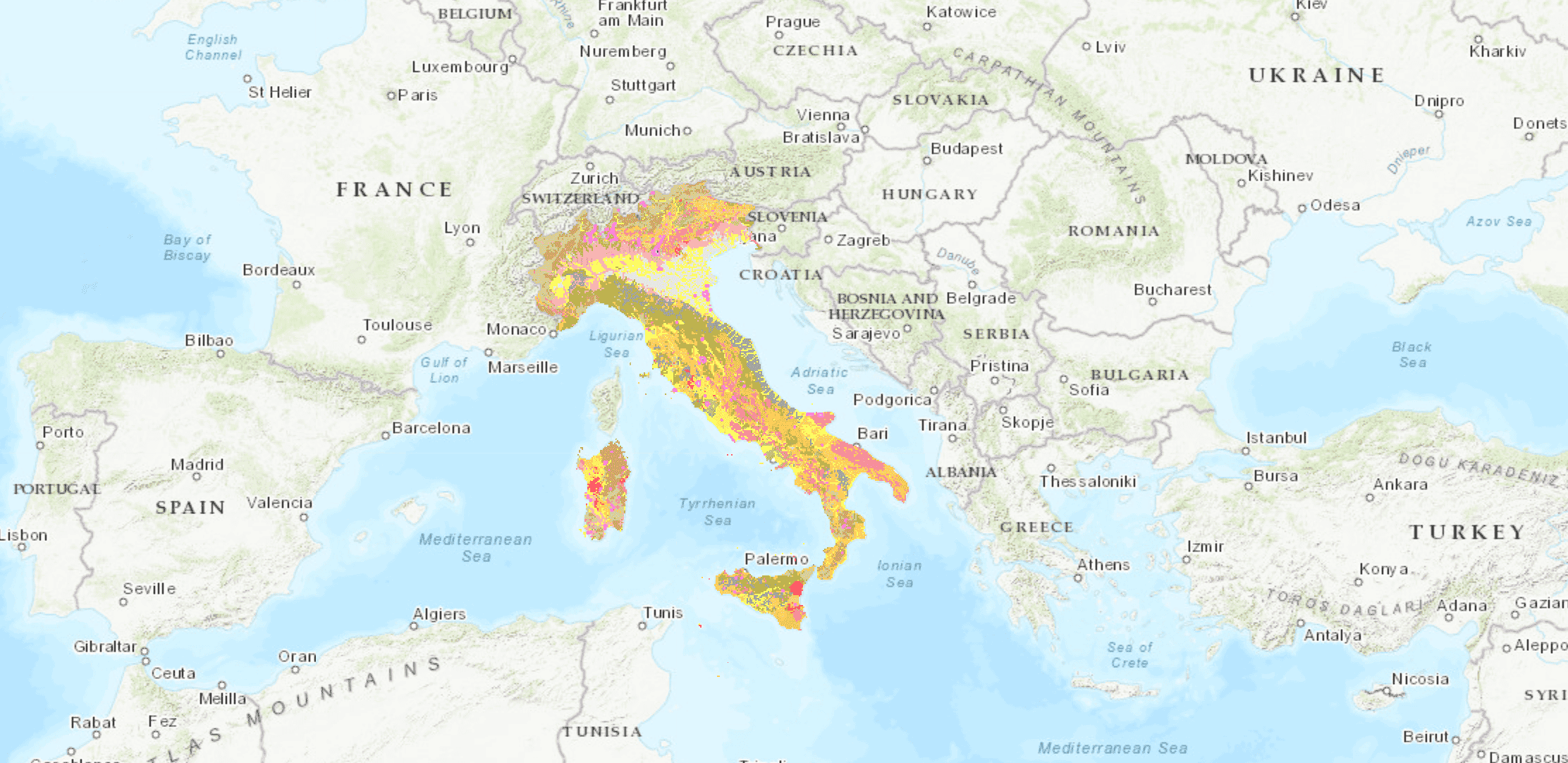
The “Carta Idrogeologica d’Italia” at 1:500,000 scale – developed through a national collaboration and strengthened by CMCC’s climate data and projections – has been awarded the Jury Special Mention at the XXI Edition of the Premio Elio Botti – Come Acqua Saliente, recognizing its contribution to the protection and sustainable management of groundwater resources.
The Carta Idrogeologica d’Italia alla scala 1:500.000 (Hydrogeological Map of Italy, 1:500,000 scale) has received the Jury Special Mention – Out of Competition 2026 at the XXI Edition of the Premio Elio Botti – Come Acqua Saliente, a prestigious recognition dedicated to applied hydrogeology and well drilling as contributions to the protection of groundwater heritage.
The map was developed through collaboration among ISPRA, ISTAT, the University of Milan, and the CMCC Foundation – Euro-Mediterranean Center on Climate Change.
“I am happy to share this wonderful news,” said Paola Mercogliano of CMCC, who contributed to this work. “This recognition enhances a national effort of synthesis and harmonization that provides the scientific community, practitioners, and institutions with a coherent and updated picture of Italy’s aquifers and key hydrogeological elements – supporting groundwater protection, sustainable management, territorial planning, and aquifer safety.”
The award ceremony took place in Padua on 18 February 2026, during the seminar “La progettazione dei pozzi per acqua – criteri progettuali per la tutela degli acquiferi.” The Elio Botti – Come Acqua Saliente Award recognizes doctoral and master’s theses, publications, projects, patents, and initiatives in applied hydrogeology, promoting scientific and technical contributions to groundwater safeguarding.
A national reference framework for groundwater resources
The Hydrogeological Map of Italy at 1:500,000 scale (CII500K) represents a major step forward in the systematization and harmonization of regional hydrogeological knowledge at the national level. It provides an integrated and updated framework of aquifers and hydrogeological complexes, offering a consistent reference for groundwater assessment, planning, and management.
Within this initiative, the CMCC Foundation played a key role by contributing advanced analyses of reference and projected precipitation and evapotranspiration data. By integrating climate data and projections into the hydrogeological framework, CMCC strengthened the map’s capacity to support forward-looking assessments of groundwater availability under climate change scenarios.
“The CII500K not only updates and harmonizes previously fragmented datasets – replacing outdated national references from the early 1980s – but also establishes a dynamic and periodically updated tool,” said CMCC scientist Giuliana Barbato, who contributed to the work. “It supports sustainable groundwater management and long-term adaptation strategies, ensuring that scientific knowledge directly informs planning and policy decisions.”
This recognition highlights the importance of combining hydrogeological expertise with climate science to address one of the most critical challenges of our time: safeguarding groundwater resources in a changing climate.