




Effective urban adaptation revolves around issues of thermal justice
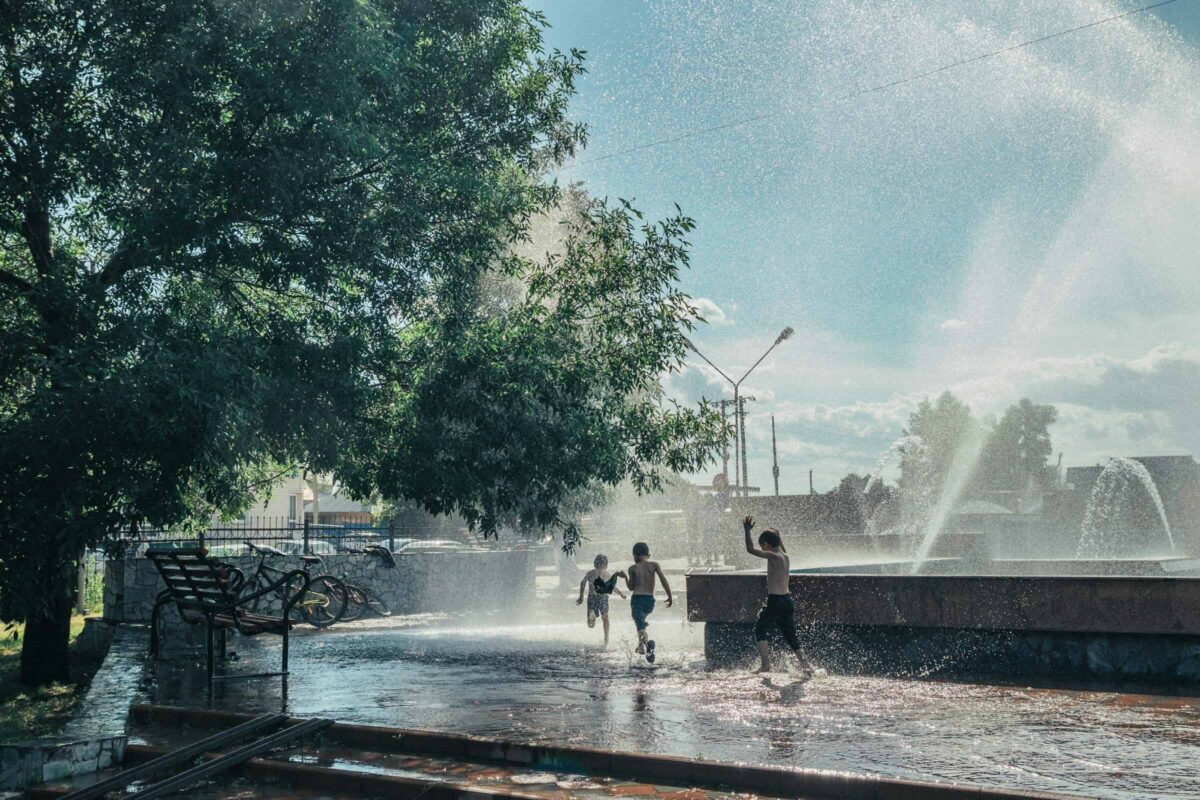
In a world of rising extreme temperatures urban areas will need to adapt if humans and non-humans are to function safely under heat. A new commentary featuring CMCC scientists and published in Nature Climate Change looks at how thermal justice can help ensure equitable adaptation and minimize heat-risk displacement in cities.
It is undeniable that cities have to adapt to heatwaves, whether this be by planting trees, opening cooling centres, subsidizing air conditioning, painting roofs, adding shade and issuing warnings. It is beyond question that these measures help save lives and improve living conditions. But, what is less understood is how they may also run the risk of oversimplifying the issue: locate hotspots, install cooling and declare resilience achieved. An approach that fails to embrace the full complexity of adaptation challenges in a warming urban world, according to a new commentary, Thermal justice in urban climate change adaptation, featuring CMCC researchers Giacomo Falchetta and Antonella Mazzone and published in the scientific journal Nature Climate Change.
Having previously led research on issues of cooling poverty, Falchetta and Mazzone add to the literature on this topic by contributing to the commentary that develops a thermal justice framework within environmental justice by focusing on thermal displacement: the shifting of heat-related risks across people, places, infrastructures, ecosystems and generations.
The commentary argues that urban cooling should be assessed not only by who receives cooling but also by whether it expands human and ecological capabilities to function safely under heat without transferring risks to less powerful communities, non-human life or future urban systems.
In this way, policy choices move from simply providing cooling services to what the authors call thermal capability: the real ability of people and ecosystems to remain safe, healthy and functioning under heat.
“For example, without thermal justice, a green cooling programme may define success as planting trees in hot, low-canopy areas. After thermal justice, it must show that cooling reaches heat-exposed residents, avoids shifting heat-related burdens to other spaces or ecologies or into the future, places shade where exposure occurs, and aligns vegetation with water availability, biodiversity and long-term maintenance,” reads the commentary.
Adaptation is an integral part of future planning around climate extremes, and as such it is important that the strategies implemented do not reproduce or exacerbate injustice. From issues of “green gentrification” – whereby green areas in certain neighbourhoods lead to higher rents and property prices, therefore forcing poorer sections of society to hotter areas – to other instances of adaptation impacting more vulnerable communities.
“The task is not simply to cool cities, but to build living capability under heat, without displacing risk onto the bodies, communities and ecosystems least able to bear it.”
For more information:
Gobatti, L., Bach, P.M., Mazzone, A. et al. Thermal justice in urban climate change adaptation. Nat. Clim. Chang. (2026). https://doi.org/10.1038/s41558-026-02727-5