




Europe can lower emissions without deindustrialising
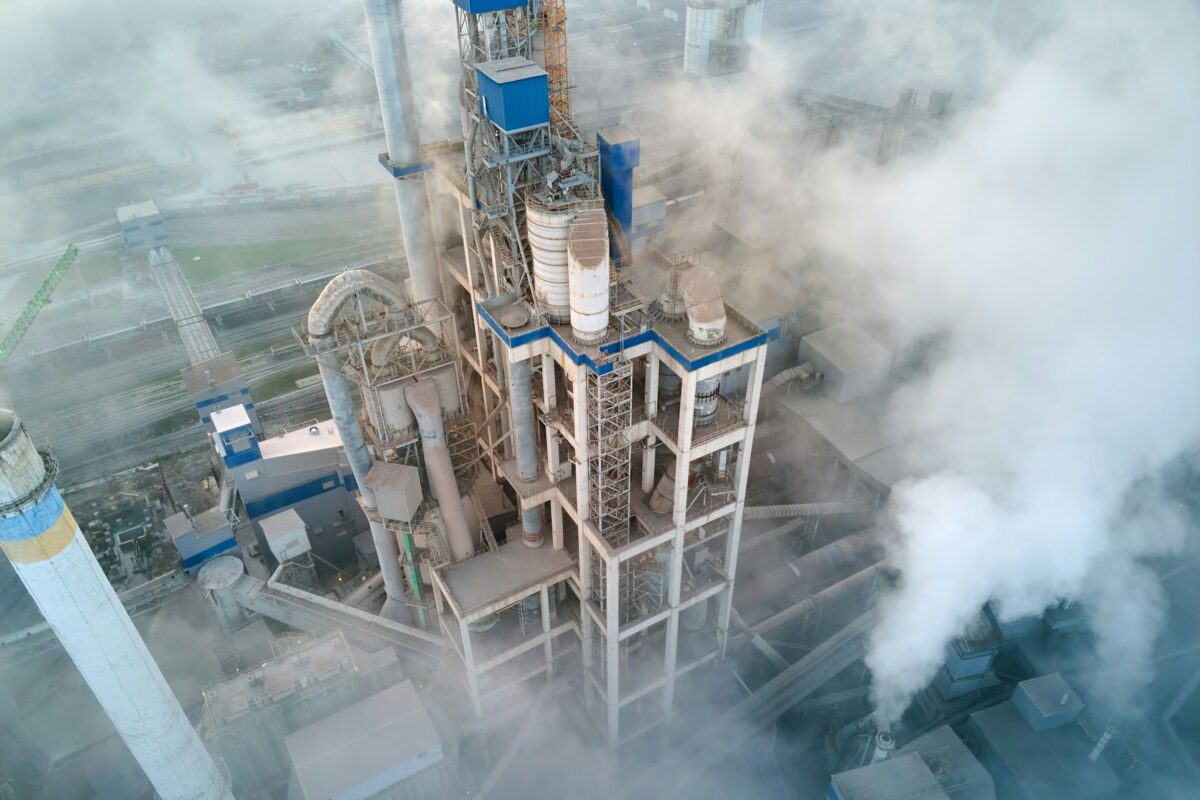
A new CMCC led study looks at how European industry can decarbonise without deindustrialising, laying out a future pathway that can combine competitiveness and environmental goals. The study finds that energy-intensive industries in Europe can attain both, but only through targeted investments and policies for specific sectors, whilst focusing on importing green intermediate products and maintaining the final part of the supply chain.
The European Union has committed to achieving climate neutrality by 2050, a process that will require rapid and substantial reductions in greenhouse gas emissions across all economic sectors.
Industry plays a central role in this transition: in 2021, the EU27 industrial sector emitted approximately 600 million tonnes of CO₂, accounting for around one‑fifth of total EU greenhouse gas emissions. Many existing industrial processes remain incompatible with deep decarbonisation pathways, especially in sectors such as iron and steel, cement, chemicals and plastics.
“Two large political fights are colliding here: keeping European heavy industry competitive whilst cutting industrial emissions. Making factories carbon-neutral often makes their products pricier,” explains CMCC researcher Alice Di Bella, lead author of a new study titled Decarbonisation without deindustrialisation: assessing future pathways for European industry.
The study is among the first to model, in detail, whether Europe can achieve both objectives – decarbonization and keeping EU industry alive – at the same time. It addresses solutions such as switching to electricity and green hydrogen and moving factories to sunnier or windier parts of Europe (such as Spain or Nordic countries).
The results show that industrial decarbonisation in Europe is technically feasible, with electrification playing a central role. However, international cost competitiveness is highly sensitive to policy choices and peaks during the investment-intensive phase of the transition.
“This study quantifies this tension and provides a solution. Europe should be practical about its capacity to expand its heavy industry. It should prioritise decarbonisation and the retention of existing industrial capacity, supported by targeted, time-limited public support and smart use of green imports, rather than pursuing broad-scale expansion of energy-intensive production,” says Professor Massimo Tavoni, a co-author of the study and institute director at CMCC.
“The best strategy is to import semi-finished green materials – such as iron that is partially processed abroad – and perform the final manufacturing step in Europe. This keeps jobs and know-how in Europe while cutting costs by up to 80 billion euros per year compared to producing everything domestically,” says Di Bella.
Whereas most previous studies either modeled the whole European energy system without much industry detail, or modeled specific industries in isolation without connecting them to the wider energy system, this paper provides a picture of five of the most energy- and emission-intensive sectors (steel, cement, ammonia, methanol, plastics) built into a full European energy system model. It also explicitly tests real policy options such as relocating factories, importing green materials, and the impacts of subsidies.
“Decarbonizing industry is possible and has been proven by many science-based studies,” says Tavoni. “However, trying to rebuild a much bigger green industrial base entirely within Europe comes at an unrealistic cost. The more promising path is a pragmatic one: protect industrial jobs and expertise we already have, and be smart about which parts of the supply chain we bring in from abroad.”
For more information:
Di Bella A, Seibold T, Brown T, Tavoni M, Decarbonization without deindustrialization in future pathways for European industry,Cell Reports Sustainability, 2026, DOI: 10.1016/j.crsus.2026.100837