




From peer reviews to policy: CMCC research turns EU wildfire assessments into a tool for better governance
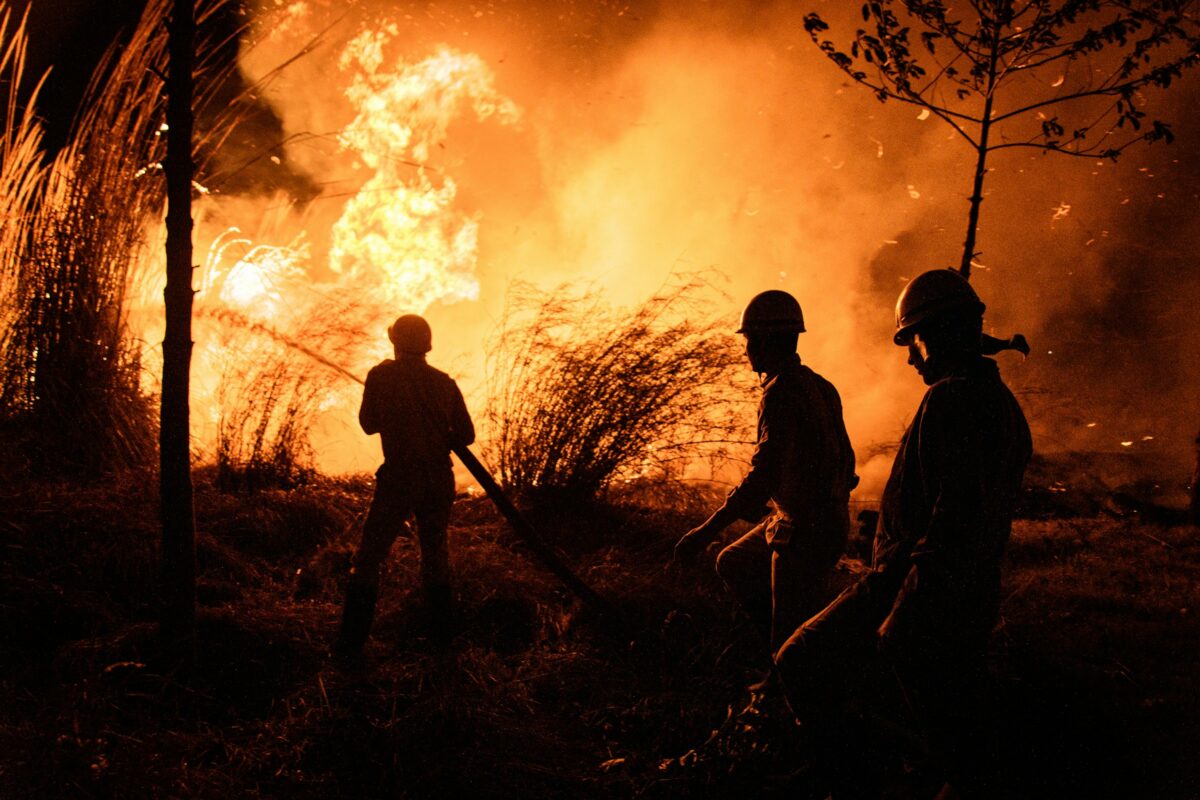
Wildfires are becoming an increasingly severe and complex risk across Europe, driven by climate change, land-use transformations, and socio-economic pressures. A new CMCC study analyses how wildfire risk is governed in Italy, Greece and the German federal state of Land Brandenburg, revealing how the institutions responsible for managing this risk actually work together, revealing governance networks that are dense and cross-sectoral, yet strongly hierarchical and still under-using scientific expertise. The study aims to help national and regional authorities identify both strengths and blind spots in wildfire risk governance
Climate change, land‑use change and socio‑economic pressures are turning wildfires from a primarily ecological process into a complex, systemic risk that cuts across ecosystems, infrastructure, public health, water resources, cultural heritage and rural livelihoods. Despite substantial investments in firefighting capacity, wildfires are projected to become more frequent, extreme and devastating underscoring the need for cross-cutting solutions.
A new CMCC study, Understanding cross-sectoral wildfire risk governance: Lessons from mix-method analysis of the wildfire risk governance in Italy, Greece, and Land Brandenburg, argues that managing this complexity requires integrated wildfire risk governance systems that span the entire disaster risk management cycle – from prevention and preparedness to response and recovery – and involve a broad range of stakeholders across multiple sectors and governance levels.
“Wildfires are a complex societal risk that requires stronger collaboration and coordination between institutions, sectors, academia, civil society organisations and local communities,” explains lead author and CMCC researcher Dana Salpina. “Our research shows that improving coordination and knowledge-sharing across governance systems is becoming essential for building resilience to climate-driven wildfire risk in Europe.”
Drawing on recent European fire statistics, the authors point to sharp increases in both burned area and the number of large fires, with 1,003,978 hectares burned over the summer of 2025 in Europe – almost four times the area recorded over the same period in 2024 – and a 60% surge in fire numbers compared to the 2006–2023 average. These trends expose the limits of fragmented, sector‑by‑sector responses and call for “whole‑of‑government” and “whole‑of‑society” approaches to wildfire risk.
Greece is presented as a Mediterranean hotspot, where the 2023 Alexandroupolis fire became the largest recorded wildfire in the EU, burning 93,880 hectares in just 15 days under extreme drought, heatwaves and strong winds.
Italy, one of the five EU countries most affected by wildfires, recorded 589 fires burning 82,462 hectares in 2024, more than double the 40,122 hectares burned in 2023, with human activity accounting for around 88% of incidents and natural causes only 1%. Land Brandenburg, while outside the Mediterranean, emerges as one of Germany’s most fire‑prone regions due to sandy soils, a dry climate and pine‑dominated forests, with 521 fires burning 1,425.5 hectares in 2022 – the highest losses since 1983 and 2018 – and 292,000 hectares of forest potentially contaminated by unexploded ordnance, complicating firefighting.
How wildfire risk is governed
Using wildfire peer review reports as the main data source, the authors reconstruct the networks of organisations involved in wildfire risk governance revealing how wildfire governance emerges as predominantly cross-sectoral, with more relationships linking different sectors than those confined within a single sector.
The study identifies a wide variety of actors in these networks, from civil protection authorities, regional and local administrations, fire and forest services to ministries, cultural heritage bodies, meteorological services, research institutions, and volunteer organisations.
“The study is particularly relevant because it looks at how different organisations and public authorities work together to manage wildfire risk across, and highlights what helps and what still limits effective coordination between sectors such as civil protection, forestry, agriculture, health, cultural heritage and academia,” says Salpina.
Although the governance systems analysed are broadly cross-sectoral, the research finds that they are also strongly hierarchical. Civil protection authorities consistently occupy central “brokerage” positions, acting as key intermediaries that connect otherwise weakly linked sectors and governance levels in all three cases. In Greece and Italy, national civil protection structures emerge as the most connected and influential nodes in the networks, while in Land Brandenburg similar roles are shared among institutions operating at both federal and state/regional level.
Across the case studies, cooperation and coordination stand out as the dominant forms of collaboration. Cooperation often takes the form of legally or administratively mandated arrangements, such as joint ministerial decisions in Greece that regulate how fire and forest services work together, while coordination relations reflect the authority to steer and align activities across institutions, particularly during high-risk periods. Membership in shared boards, committees, and working groups is also common, especially at regional level, helping to institutionalise regular cross-sectoral dialogue.
At the same time, consultation and information-sharing ties – relations that typically involve advisory functions, data exchange, and scientific or technical expertise – are less frequent across all three networks. Scientific and advisory actors are generally less integrated into the core governance structures than operational actors, suggesting room to strengthen evidence-informed decision-making, data sharing, and science-policy collaboration.
“By analysing how institutions actually work together and connect across different governance context, we wanted to test and identify practical methodologies to understand the cross-sectoral connections that can support more integrated and adaptive wildfire governance across Europe, and beyond,” says co-author of the study and CMCC researcher Veronica Casartelli.
The research shows that wildfire peer review reports, when based on scientifically robust and transparent frameworks, can serve as a reliable and systematic source for governance analysis. Social network visualisations and metrics derived from these reports can help national authorities and other stakeholders identify central actors, missing links, clusters, and potential coordination gaps within their wildfire governance systems. According to the authors, this diagnostic perspective can be replicated by countries and regions seeking to strengthen their own governance arrangements, without the need for extensive primary data collection.
“This study is particularly important because it sits at the intersection of science, policy, and practice,” continues Casartelli. “The findings show how UCPM peer review reports, when based on scientifically robust and transparent frameworks, can become effective tools for supporting evidence-informed policy and practical decision-making – strengthening the dialogue between scientific knowledge and real-world governance challenges.”
As wildfires continue to increase in frequency and intensity strengthening cross‑sectoral collaboration – and especially embedding scientific advice and information‑sharing in the heart of governance networks – will be crucial for building more integrated, adaptive wildfire risk governance across Europe.
For more information
Dana Salpina, Veronica Casartelli, Angelica Marengo, Jaroslav Mysiak, Understanding cross-sectoral wildfire risk governance: Lessons from mix-method analysis of the wildfire risk governance in Italy, Greece, and Land Brandenburg, International Journal of Disaster Risk Reduction, Volume 142, 2026, 106201, ISSN 2212-4209, https://doi.org/10.1016/j.ijdrr.2026.106201