




New oceanographic buoy strengthens monitoring of coastal waters in Civitavecchia
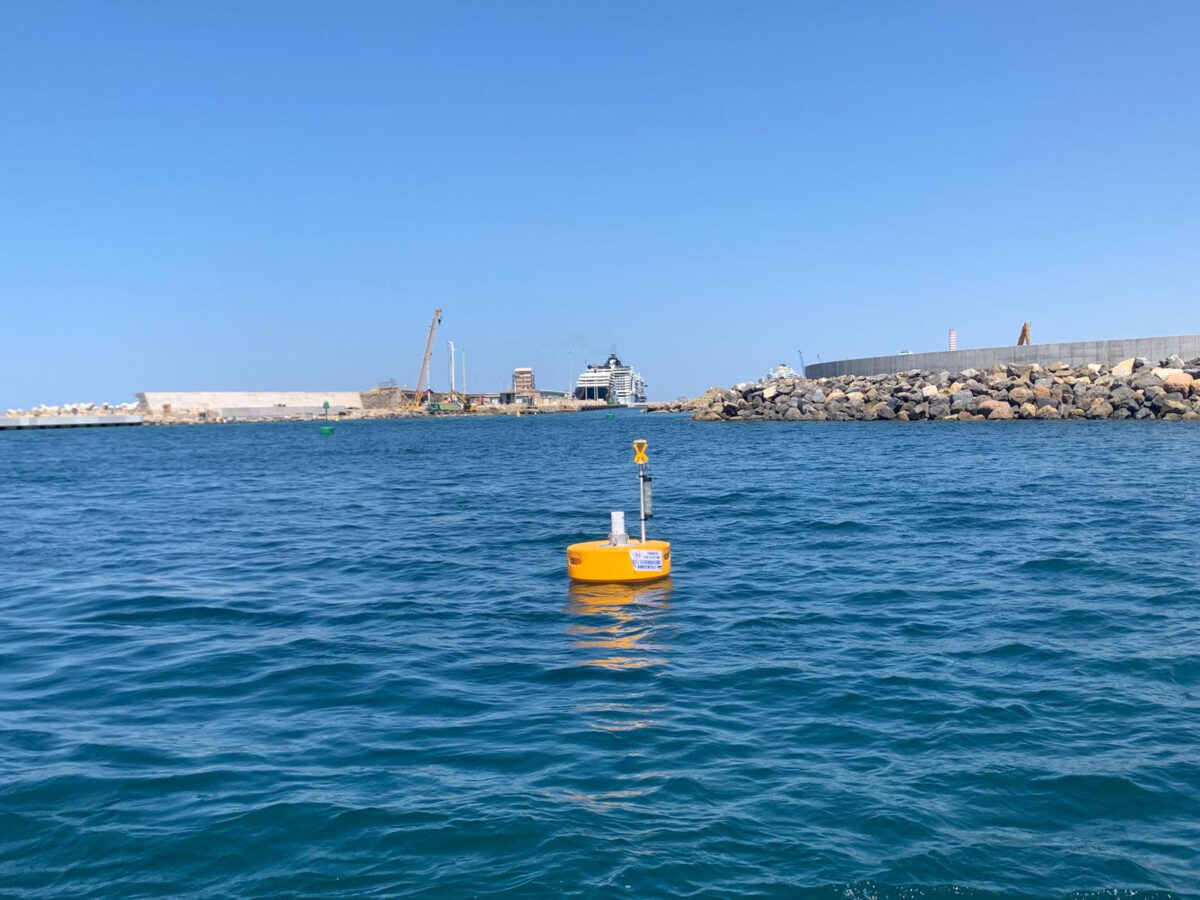
A new multiparametric oceanographic buoy has been deployed off the port of Civitavecchia as part of a project involving CMCC. The buoy will provide continuous observations of coastal water quality in an area exposed to multiple human and climate-related pressures.
The buoy is part of the MARECIV project, funded by the Civitavecchia Environmental Observatory, and involves the Euro-Mediterranean Center on Climate Change (CMCC) and the Laboratory of Experimental Oceanology and Marine Ecology (LOSEM) of the University of Tuscia. The initiative aims to improve understanding of coastal processes that affect marine ecosystems and water quality, with potential implications for public health.
The station will continuously measure a range of physical, chemical and biological parameters in surface waters, including temperature, salinity, dissolved oxygen, pH and chlorophyll, as well as meteorological and marine conditions. The data will also help validate operational models developed by CMCC for the study area.
“This buoy will allow us to acquire continuous data on water quality and on the main parameters of the water column in an area specifically selected because it is exposed to multiple anthropogenic pressures, both urban and industrial, as well as related to climate change,” says Viviana Piermattei, oceanographer at CMCC, who contributed to the buoy’s deployment together with Daniele Piazzolla.
Continuous observations are particularly valuable in coastal areas, where monitoring stations providing high-frequency data remain limited, despite the increasing impacts of extreme events and human activities. The new buoy will therefore help address an important observational gap while providing data to improve the performance of predictive models. “The data collected will be fundamental to validate predictive models and understand how these parameters evolve over time,” Piermattei adds.
Located near the site of the port expansion works, the buoy will also provide a continuous observation point for monitoring environmental conditions in an area undergoing significant human activity. “It thus becomes a permanent observation point available to the city, providing valuable information to continuously assess the health of the sea,” Piermattei says.